Eighteen months ago the Osprey Daylite 26+6 became my default bag. Not just my travel pack — my everyday carry, my daypack, my grocery-run bag, the thing that sat by the door. A year and a half of genuine, unglamorous use later, the question is simple: does the hype hold up? And should you buy one, or is there something out there that fits you better?
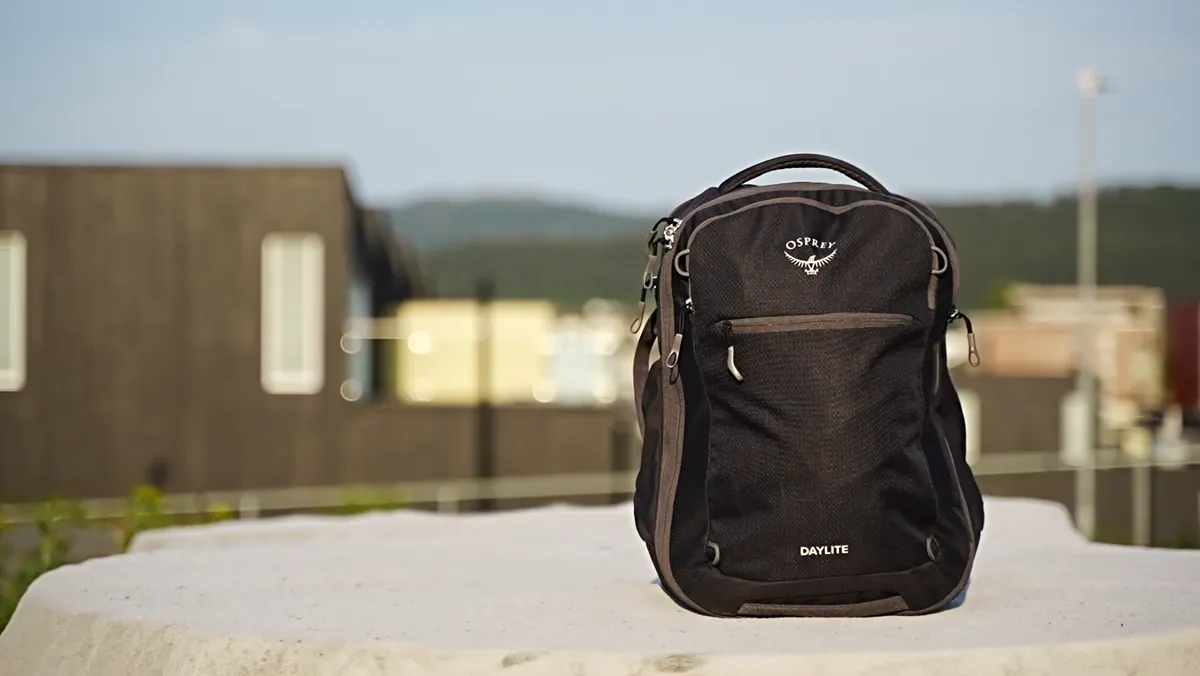
Watch the full long-term review
The short verdict
The legend status is deserved. After eighteen months I have had zero quality issues — no loose threads, no zipper trouble, no wear that worries me. It is still one of the best value propositions in travel backpacks, and it is genuinely three bags in one.
It is not perfect. Fully expanded to 32 litres the carry comfort falls off, the laptop sleeve is minimal, and the admin pockets are bare. But at roughly $100, those are compromises rather than dealbreakers.
| Spec | Detail |
|---|---|
| Capacity | 26 litres, expanding to 32 litres |
| Weight | Well under 1 kg |
| Opening | Full clamshell, like a suitcase |
| Back panel | Osprey AirScape ventilated mesh |
| Device storage | Internal sleeve against the back panel (not a separate compartment) |
| Luggage pass-through | Yes — also doubles as partial strap stowage |
| Hip belt / load lifters | None |
| Typical price | Around $100, often less |
| Personal item friendly | Yes on a large number of airlines — check your specific carrier |
Why this pack became a legend
The Daylite 26+6 punches well above its weight class. It does most of what travel backpacks costing two or three times as much can do. You get 26 litres that expand to 32 when you need them, and it is genuinely light — well under a kilo. That matters far more to most travellers than they expect it to.
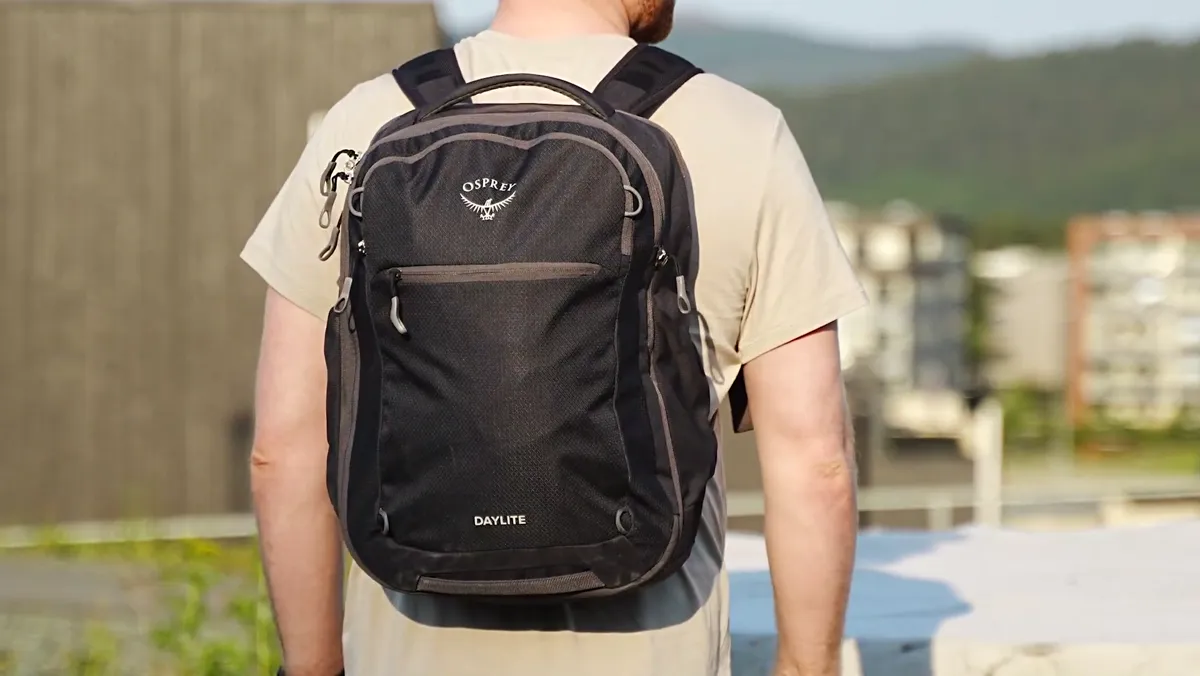
But what really made it a legend is its versatility. This is one pack that works as a travel bag, as a daypack once you arrive, and as a commuter or EDC bag back home. Three bags in one, at a very competitive price that is often well under $100.
It has also become a favourite among one-baggers and a popular platform for modifications. People add strap keepers, hip belts, and all sorts of clever solutions to push the pack further than Osprey ever intended.
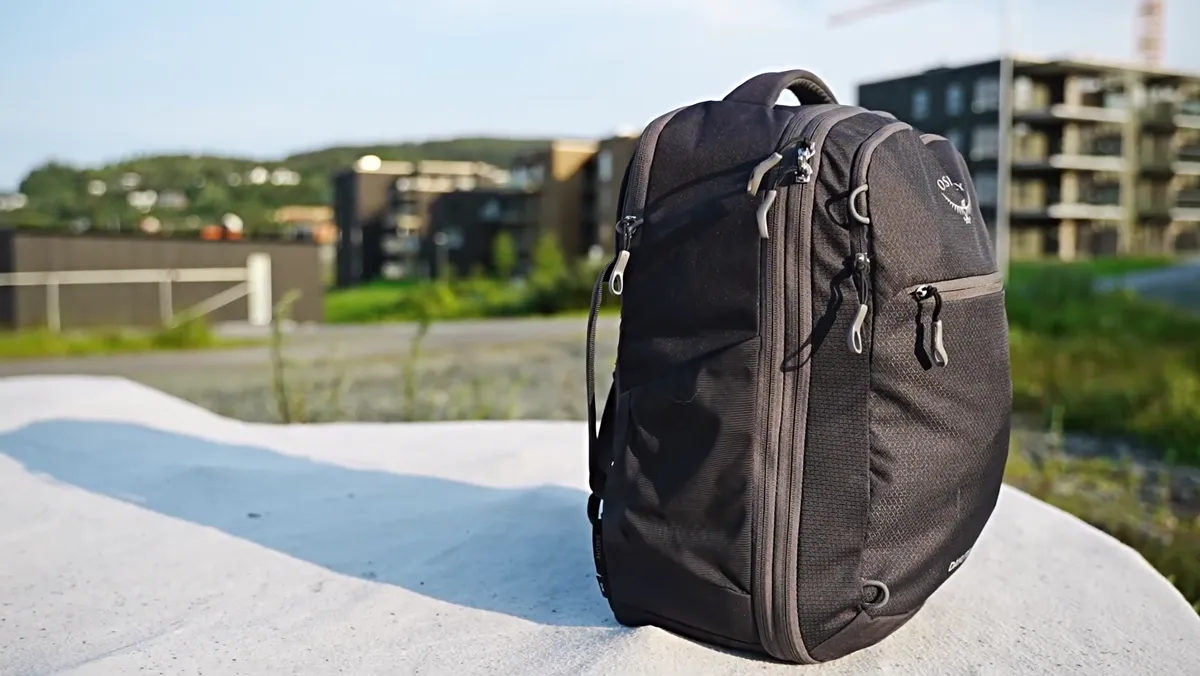
The full feature rundown
Let’s work through it from the outside in.
Handles and attachment points
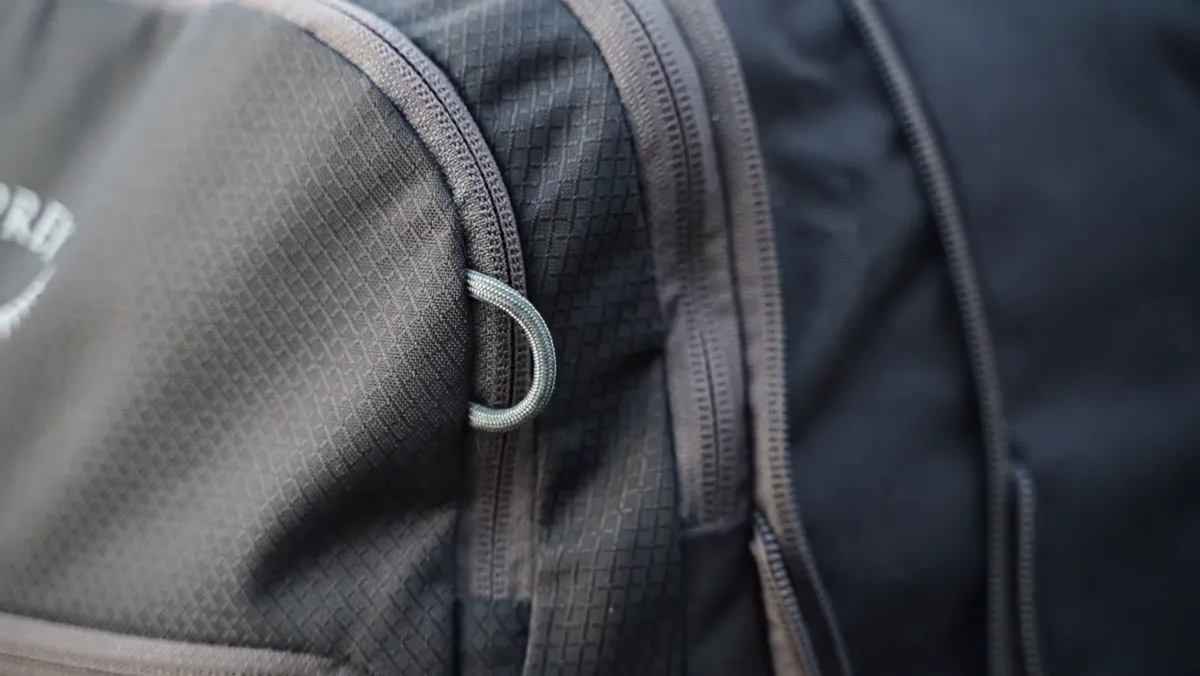
There is a sturdy top handle I trust with a fully packed bag, plus a side handle for briefcase-style grabs and a third handle at the bottom front. Four lash loops let you strap extra gear to the outside — a jacket, or even a yoga mat.
Side pockets
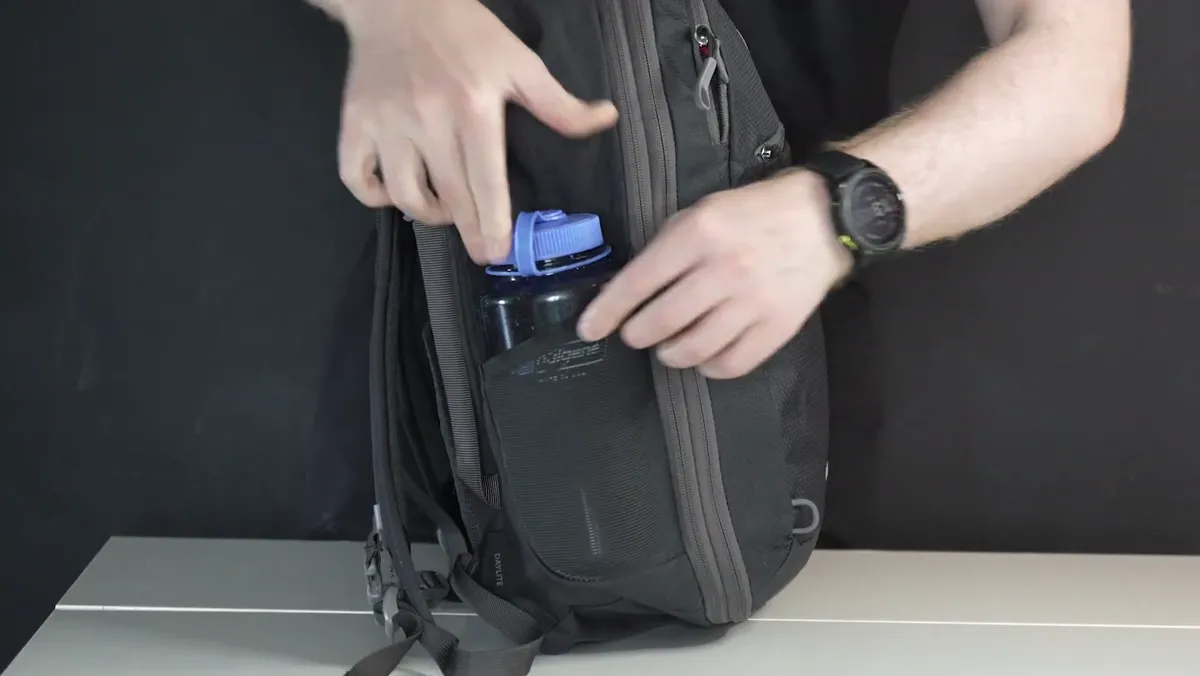
The stretch mesh bottle pockets are spacious enough to swallow two one-litre Nalgenes. There is no system to lock a bottle in place, though, so on rough terrain a carabiner is smart insurance.
Front organisation
You get two flat front pockets. The top one is for quick-access items — earbuds, cables, pens — with built-in mesh organisers and a key clip. That clip can get caught in the zipper if you are moving around a lot, so my advice is to dedicate the mesh pocket next to it to your keys instead.
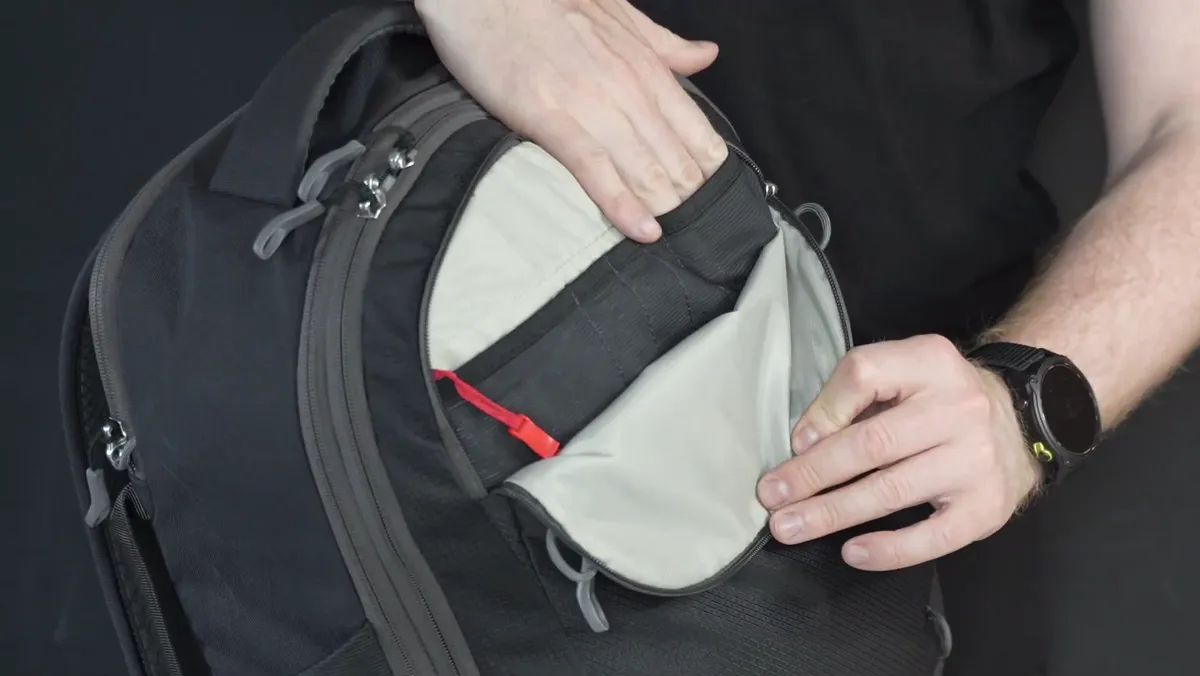
The lower front pocket lies flat against the bag, which makes it perfect for a Kindle or travel documents. My own unit has been modified so these pockets can take a passport, and a newer version of the bag reportedly fits a passport in one of them without any DIY work at all.
The back panel
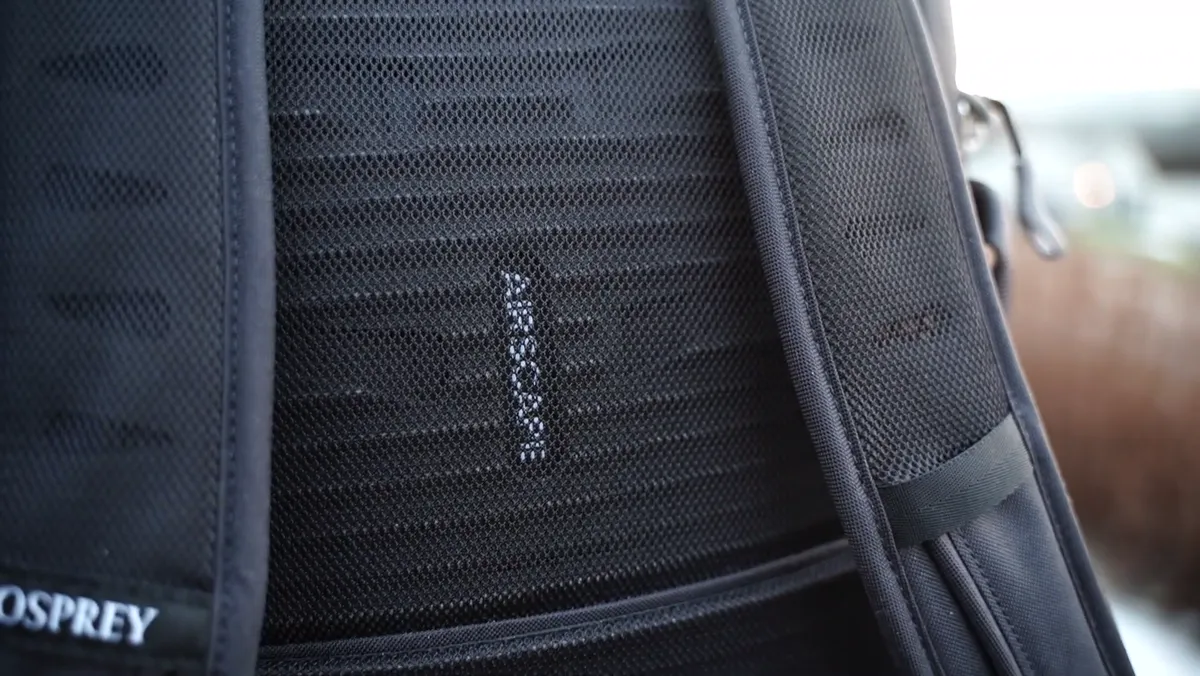
The back panel uses Osprey’s AirScape ventilated mesh, which keeps air moving, and the shoulder straps are more comfortable than they have any right to be at this price. There is also a luggage pass-through for your roller bag, which doubles as a way to partially stow the straps.
Main compartment
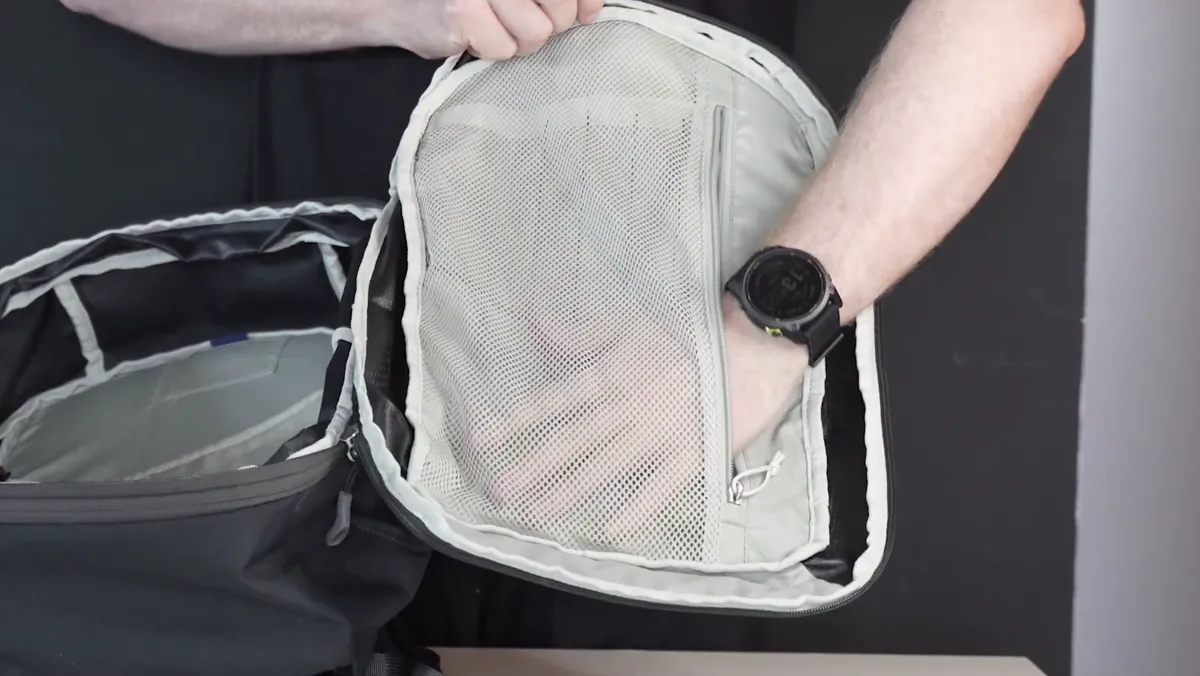
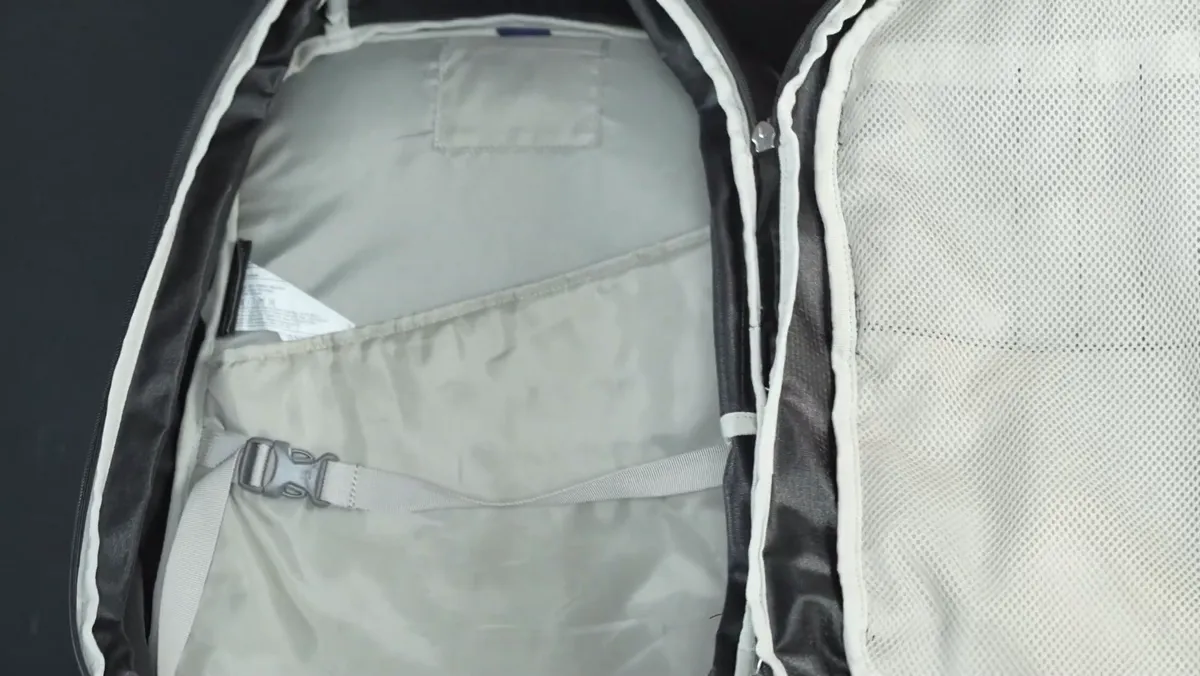
It opens clamshell, like a suitcase — still the single best thing about packing this bag. Inside there is a flat pocket, a small AirTag pocket and a compression strap.
The device sleeve
This is a simple internal sleeve against the back panel rather than a separate compartment, but it fits even a large work laptop, and the zipper has a small loop you can lock for basic security.
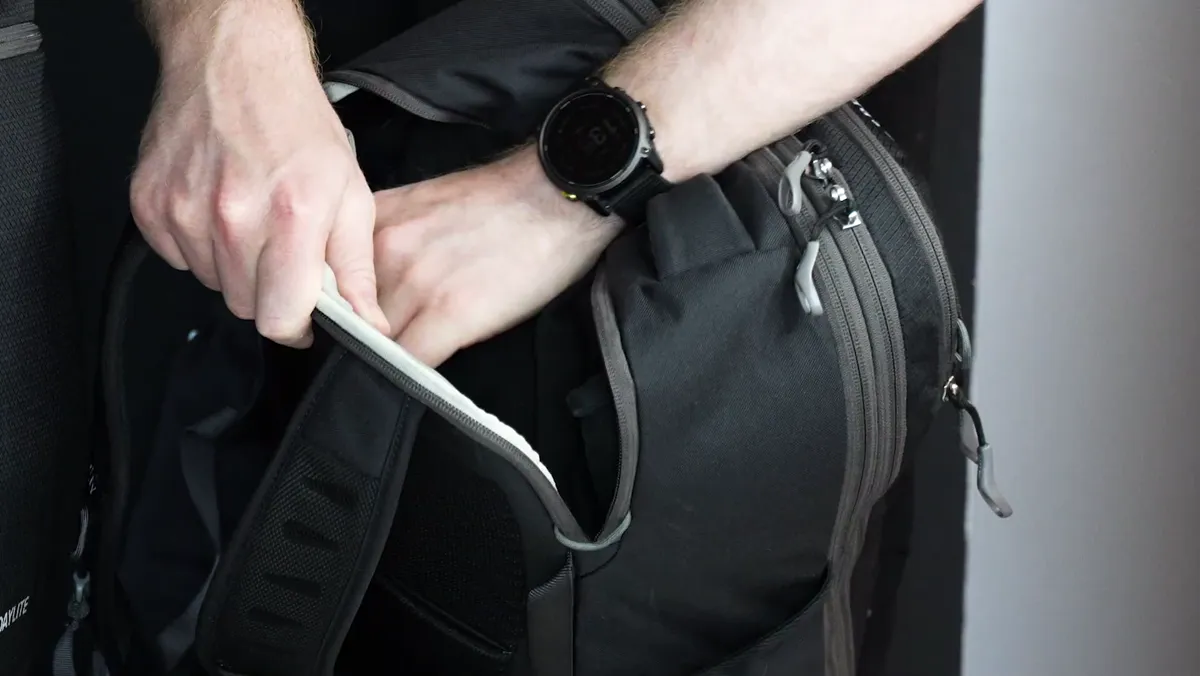
The upside is real: if you are not carrying a laptop, the sleeve simply disappears out of the way instead of eating into the main compartment the way many other bags do. The downside is that getting a device in and out can be fiddly. I regularly miss the opening, hit the middle of the sleeve, and have to guide it in by hand. If you travel with a laptop often and tend to fill the bag, look at the Daylite 35 instead — it has a proper dedicated compartment.
And the party trick
Unzip the expansion and you have 32 litres. This is genuinely useful in two situations. On a trip, you can travel out with a bit of extra volume, then zip it back down at your destination and use the same bag as a daypack. At home, if this is your everyday carry, that extra space is there on the days you need it — a grocery run being the obvious one.
Eighteen months in: what still holds up
Start with durability, because this is where the pack earns its reputation. After eighteen months I have had zero quality issues. No loose threads, no zipper trouble, no wear that gives me pause.
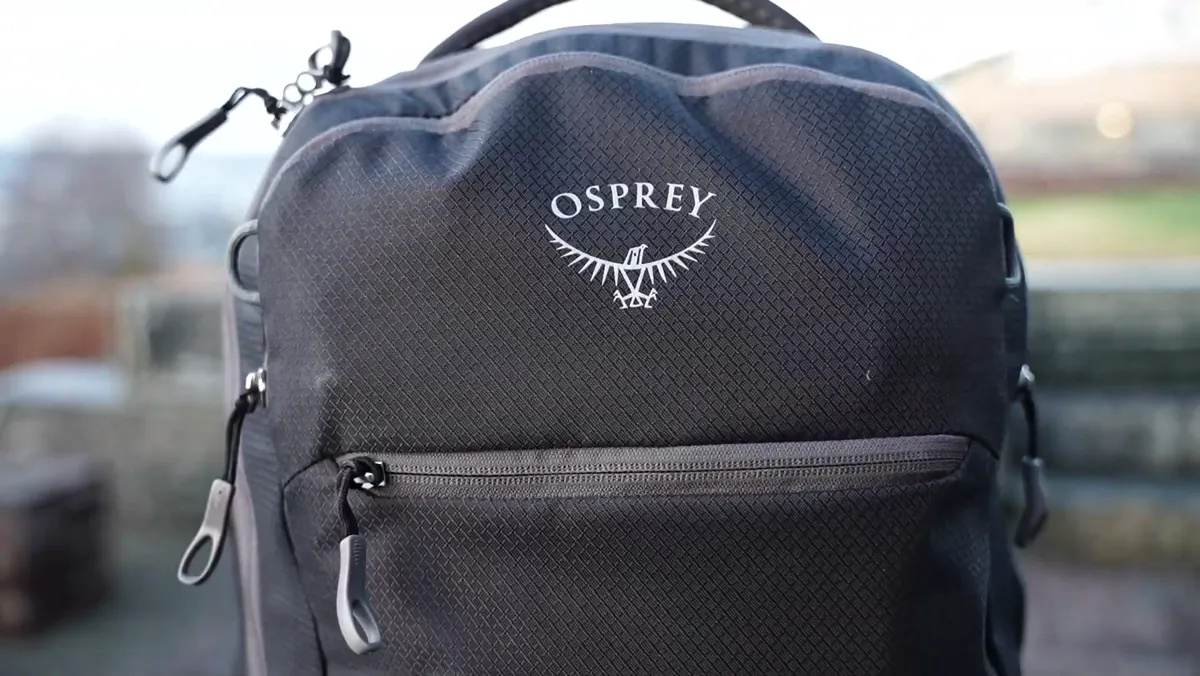
I filled it completely on a summer ferry trip once — several days of gear, city walking, trips to the beach. It handled all of it without complaint. And it is genuinely freeing to have one bag that does everything, rather than a larger bag that also requires you to bring a packable daypack.
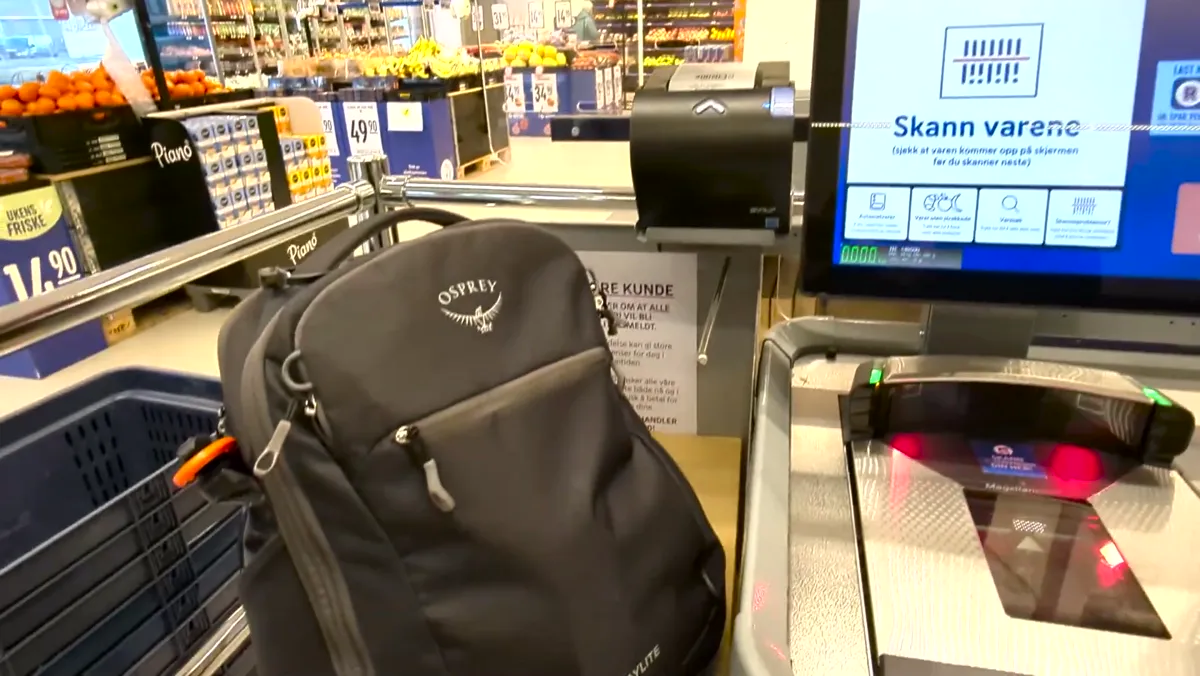
What I have come to appreciate most, though, is how good it is as a daypack at home. Short day hikes, a trip to the beach, a quick grocery run. It is light and simple and it never feels like overkill. Just like when you travel, it blends in and takes up very little space on your back when there is not much in it.
I cannot say the same about the Osprey Sojourn Porter 30 I have been testing for six months. The Porter beats the Daylite on security, admin organisation and carrying comfort — it uses what Osprey calls a straitjacket design. Structured, buttoned-up, built purely for travel. In my experience that makes it a poor daypack and a poor commuter. When I travel with the Porter I still have to pack a separate packable daypack, even with the 30-litre version in its compressed state, purely because of how the bag is designed. With the Daylite, the travel pack is the daypack. That is convenient, and it saves you the weight of carrying a packable daypack in the first place.
The Daylite also forces you to pack light and to think honestly about what you actually need, rather than what might be convenient.
Which brings me to its strongest use case. If you like travelling minimally — especially personal-item-only — this is one of the best candidates you can buy. It passes as a personal item on a large number of airlines, though you should always check your specific carrier. It slides under the seat, and it is cheap compared to what it offers and to the competition, which often costs two to three times as much at a heavier weight.
The honest cons
After eighteen months I know exactly where this pack stops being fun. These are my opinions, so take them as that.
1. The 32-litre mode
Expanded and fully loaded, the pack changes character. You end up looking a bit like a turtle, and the carry comfort drops off noticeably. There is no hip belt and there are no load lifters, so all the weight hangs on your shoulders. For me this pack is at its best around six or seven kilos.
2. The laptop sleeve
I often travel with a tablet and keyboard, or a laptop. That simple internal sleeve is too small and too cramped for me, and in a full pack getting a device in and out is a hassle.
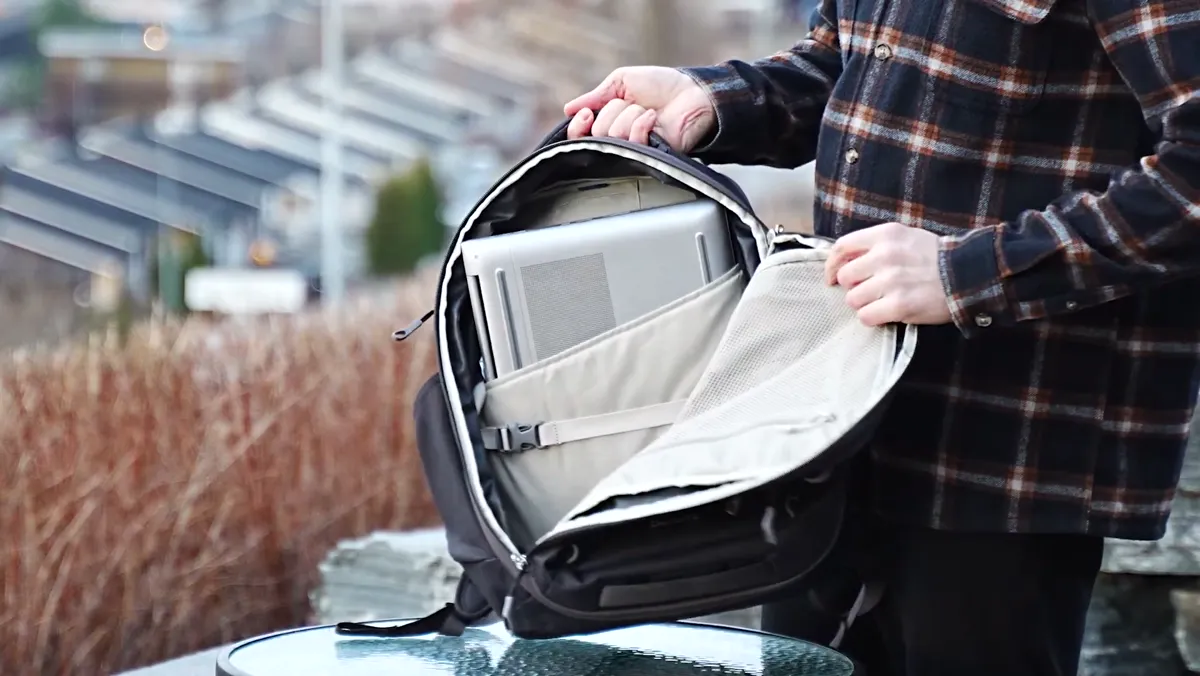
To be fair, plenty of minimalists want exactly this. If you never travel with a laptop, a barely-there sleeve is a feature rather than a flaw. Just know which camp you are in before you buy. If you want the same design language with a real, dedicated laptop compartment, that is the Osprey Daylite 35.
3. The admin pockets
They are simple and minimal. The top pocket is small, and you cannot really stash a passport there securely. If you like a proper, extensive admin setup for documents, cables and small gear, this pack will feel bare.
None of this rules the bag out. But it does tell you who the bag is for. And at this price I still think these cons should be taken with a pinch of salt, given how much value the pack delivers for around $100.
Alternatives worth considering
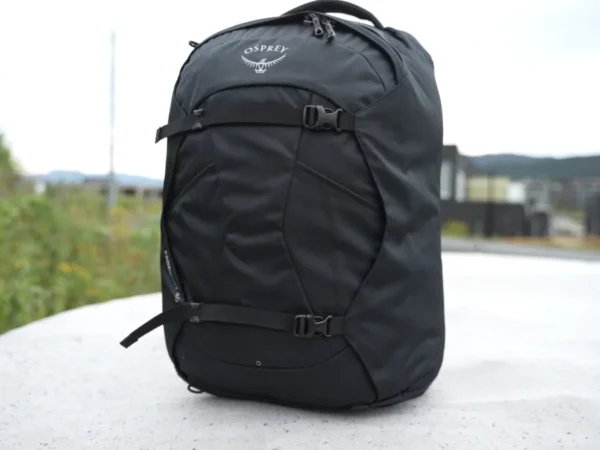
The Daylite 26+6 gives you fantastic value for the money. But my own preferred travel companion is the Osprey Sojourn Porter 30.
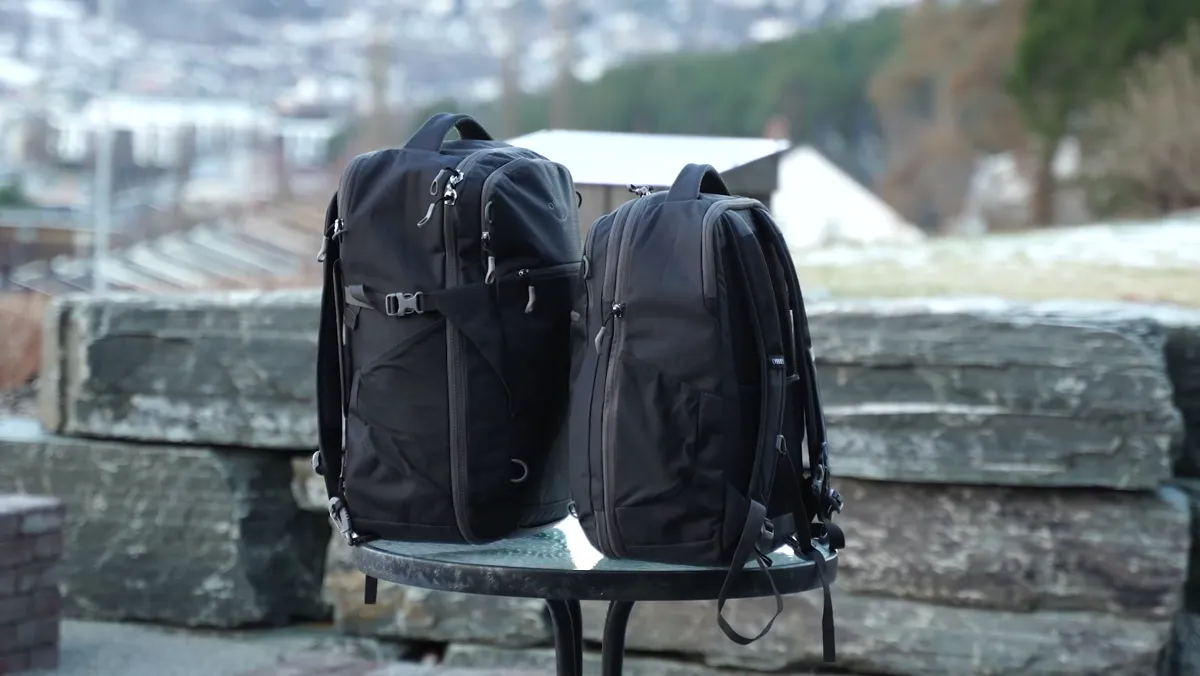
The reason comes down to comfort and function. The Porter has a stowaway hip belt for longer walks and it has load lifters. A full Daylite in 32-litre mode simply is not as comfortable as a Porter 30 carrying roughly the same load. The Porter also has a far better admin setup, which suits the way I travel. I am currently reviewing the larger Porter 46 as well, so an in-depth review of that is coming.
That said, the Porter costs more, and it is built on completely different principles — a structured travel pack, not a daypack. The Daylite is the ultralight do-everything option. I will take the comfort and the organisation; you might take the lower weight, the lower price and the one-pack simplicity. It comes down to budget and preference.
If the Daylite is not quite right for you, here are three alternatives in the same price and capacity class.
Osprey Daylite 35
The same design language, but with a real, dedicated laptop compartment. I travelled with mine fully packed over Christmas 2024, tablet riding in the laptop compartment of an otherwise stuffed bag, and it worked great. Read the full Daylite 35 review, or the 26+6 versus 35 head-to-head if you are torn between the two.
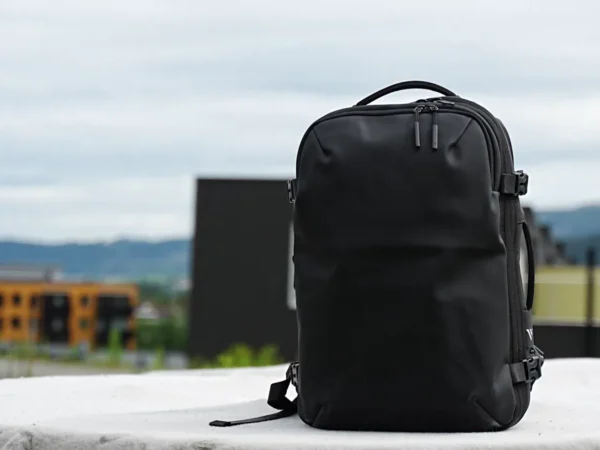
Tomtoc Navigator T66 Liteway 28L
Roughly the same price and weight, but a more urban look. Clamshell opening, a dedicated laptop compartment that fits up to a 16-inch machine, YKK zippers and a luggage pass-through. If the outdoorsy look of the Daylite is not your thing, start here. I am currently reviewing Tomtoc’s bigger T67, and so far the quality, price and comfort are excellent. I also think this line fits an urban travel style better.
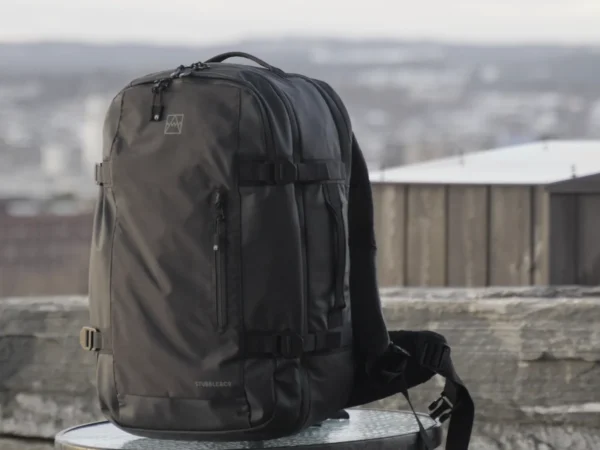
Bagsmart Blast
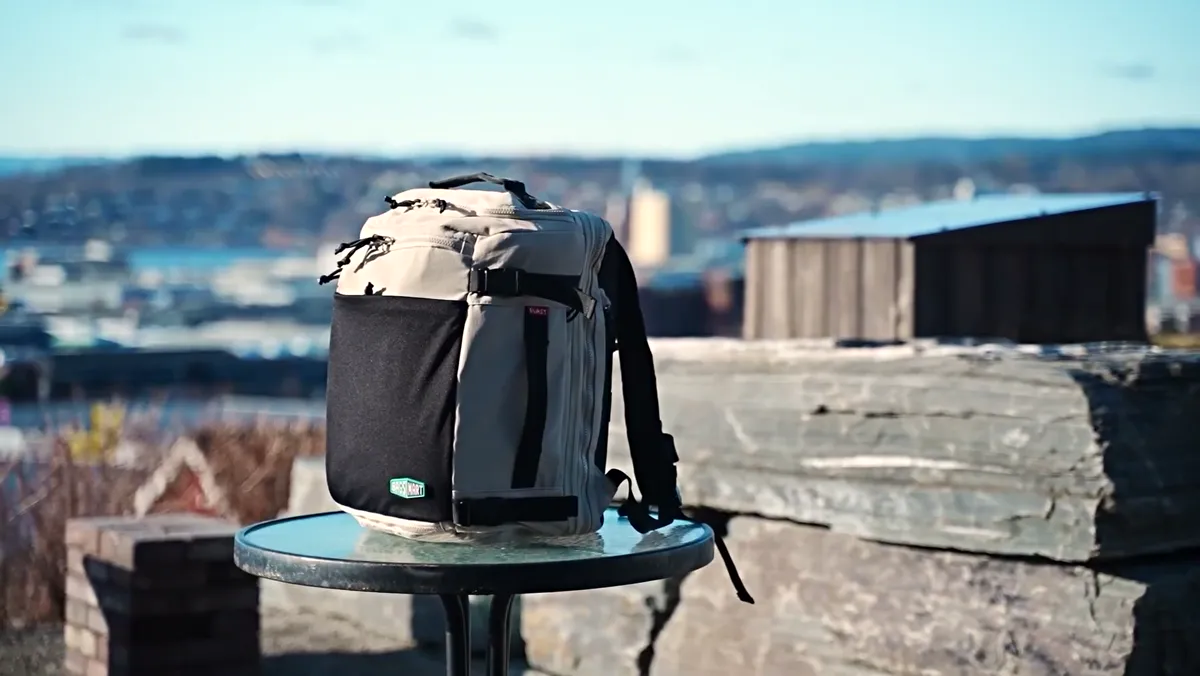
It shares the Daylite’s party trick, expanding from 28 to 38 litres while staying under $80, and it adds a laptop compartment, a shoe compartment and a dirty-laundry compartment that is also great for wet swimwear after a day at the beach. The trade-off is structure — it sags when expanded and the materials feel more budget. But it is a lot of bag for the money. Here is my full Bagsmart Blast review.
Pros and cons after 18 months
What I like
- Zero quality issues in eighteen months of hard, varied use
- Genuinely three bags in one: travel pack, daypack and EDC
- Well under a kilo, so it never punishes you for bringing it
- The 26-to-32-litre expansion is useful both on the road and at home
- Full clamshell opening makes packing easy
- Shoulder straps and AirScape back panel punch above the price
- Excellent personal-item candidate on many airlines
- The device sleeve stays out of the way when you are not using it
What I don’t
- Carry comfort drops off sharply when fully expanded and loaded
- No hip belt and no load lifters — everything hangs on your shoulders
- The laptop sleeve is cramped and fiddly in a full bag
- Minimal admin pockets, and no secure home for a passport
- Nothing locks a bottle into the side pockets on rough terrain
- The key clip can catch in the zipper
The verdict
So, after eighteen months, is the legend status deserved? Absolutely. If you pack light, travel personal-item-only, or simply want one affordable pack that covers travel, day trips, commuting and daily errands, get the Osprey Daylite 26+6.
If you carry more weight, walk further, or need real organisation and a proper laptop compartment, spend up on the Osprey Daylite 35 or consider the more feature-packed Sojourn Porter 30.
If you want the first-impressions take on this bag, my original Osprey Daylite 26+6 review is still up — this article is the long-term follow-up to it.