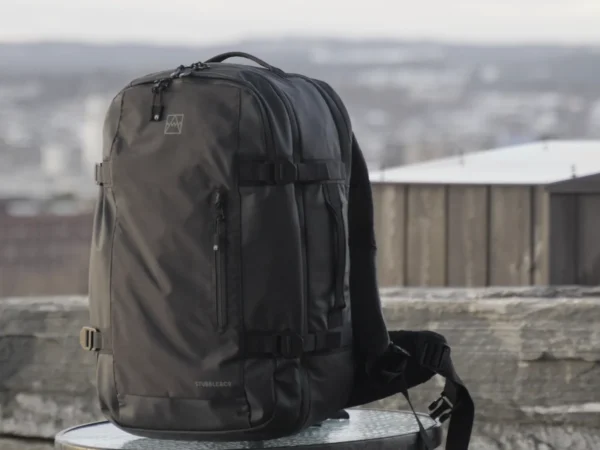
This backpack claims to be a 35-liter bag one minute and a 60-liter bag the next, and it pulls off that trick with a vacuum seal. That headline is what got my attention. So I daily drove the Black Voyage Zephyr Pro Lite for two months, including a domestic flight here in Norway, and I landed on a pretty clear idea of who it is for and who should skip it.
A quick disclaimer. Black Voyage sent me this bag for review, but I had no say over anything you read here, and every opinion is my own. One note on the trim, too: this is the Pro Lite, the lighter version without the TSA lock. I am completely fine with that, and I will explain why later.
| Spec | Black Voyage Zephyr Pro Lite |
|---|---|
| Capacity | 35 L base, 50 L expanded, up to 60 L with vacuum compression |
| Weight | 2.05 kg on my scale without the hip belt (about 2.3 kg with it) |
| Zippers | YKK, waterproof on the key panels |
| Fabric | TPU-fronted, with X-Pac and Cordura options in the range |
| Security | Hidden back-panel stash pocket, no TSA lock on this trim |
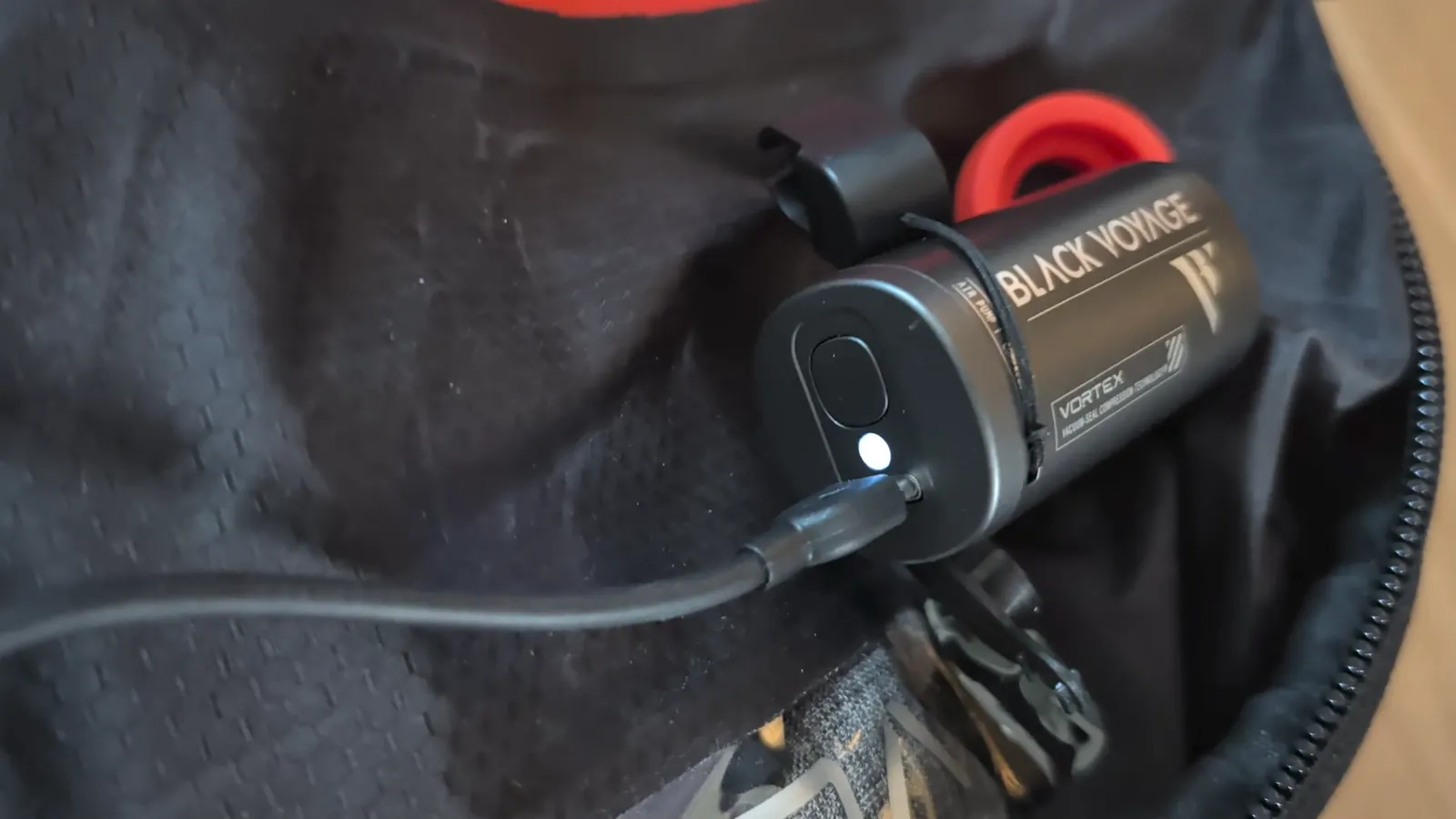
| Pump | Black Voyage Vortex, 60 kPa, up to 15x the suction of typical travel pumps |
| Price | Roughly $260 to $360 depending on fabric |
The vacuum seal and what it actually does
This is the headline feature, so let us start here. The Zephyr is a 35-liter bag at its base. Unzip the expansion and it grows to about 50 liters. Load the internal vacuum chamber, zip it shut, and pump the air out, and you crush up to 60 liters of packed clothing down into a carry-on footprint.
Here is my honest take after two months. Marketing makes this look instant. It really is not. One tip helps a lot: squeeze the load down by hand as much as you can before you start pumping. Black Voyage sells the Vortex pump, which the brand rates at 60 kPa and up to 15 times the suction of typical travel pumps. That is the one they sent me, and it does the job.
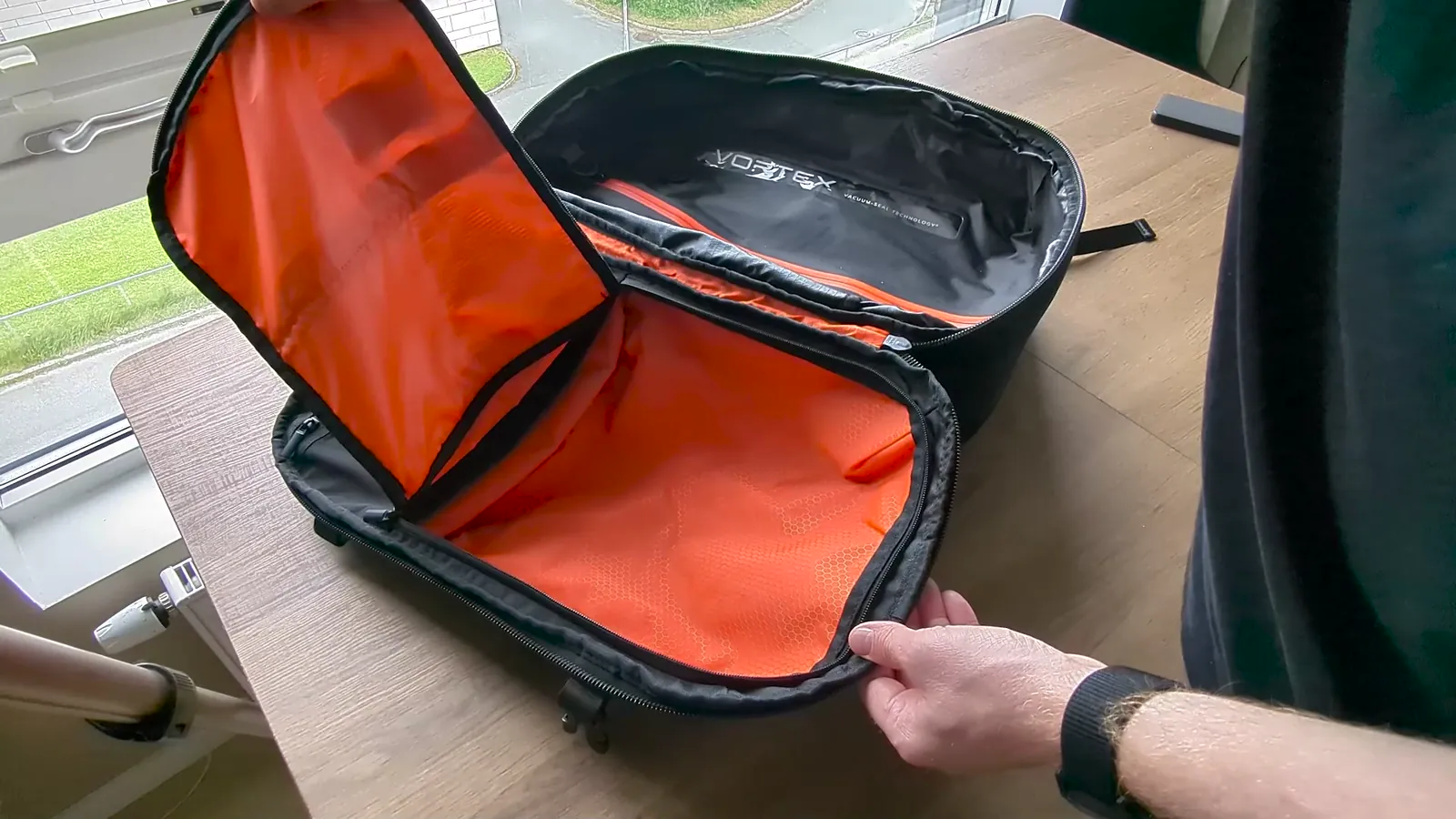
Reliability was a non-issue. I never had the chamber pop open or fail, as long as I zipped it all the way shut. It really does buy you space, and the compression held long enough to matter on a travel day.
Organization and pockets
This bag is built for people who like a place for everything, and the pockets back that up.
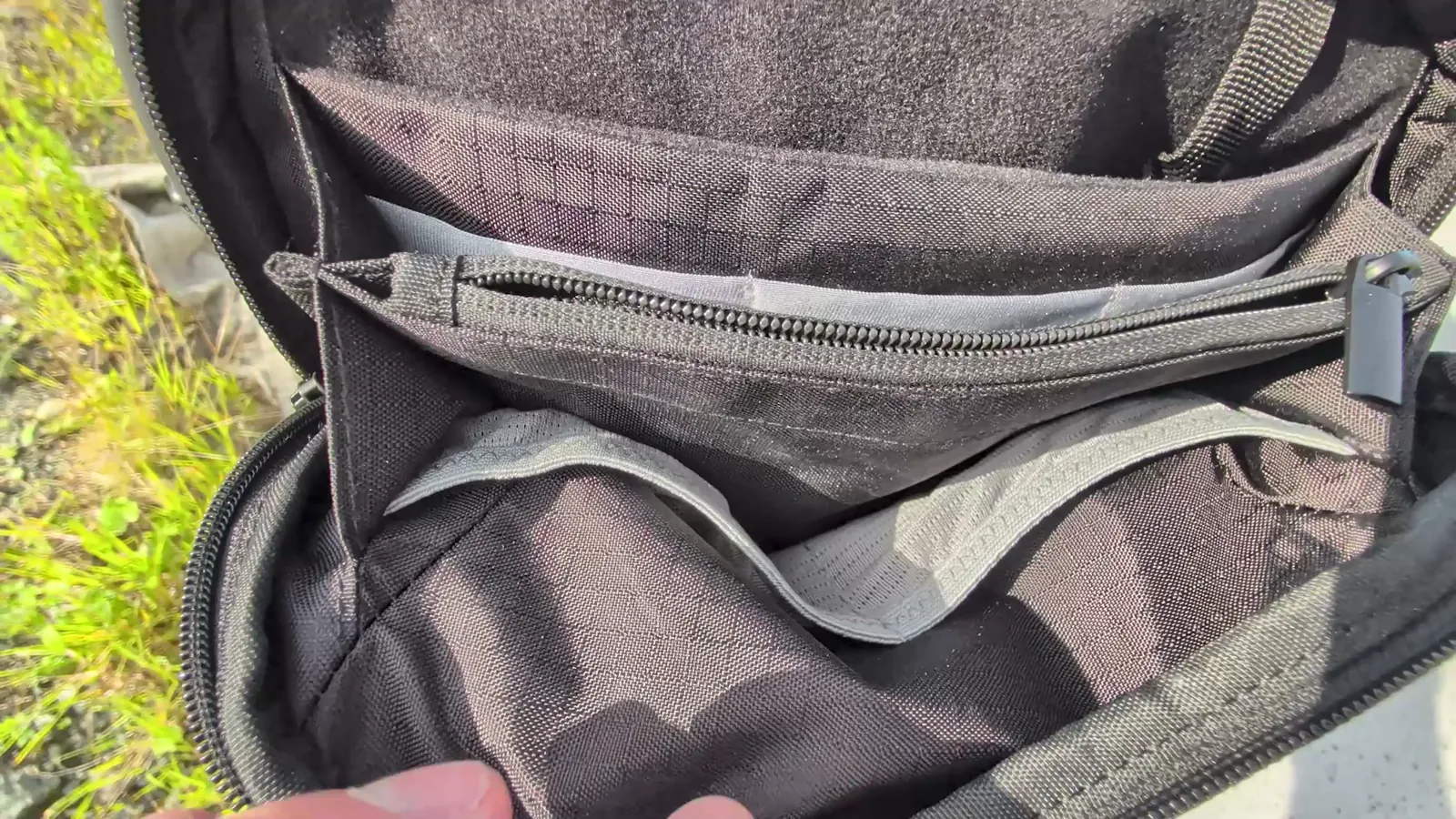
The admin pocket is not the biggest out there, but it is well sorted. There is a zip pocket that works like a built-in wallet, a detachable key clip, and a soft pocket inside that closes magnetically. I could argue for a slightly deeper admin pocket, but that would eat into the deep pocket behind it, and I ended up stuffing that deep pocket with a tote, a rain jacket, an umbrella, and a packable day pack. It earned its place.
The water bottle pocket is one of my favorites, because it tucks away flat when empty. I run a collapsible bottle, so a hideaway pocket is perfect. A metal bottle up to about 0.7 liters fits fine. Push past that and it gets tight, and a one-liter Nalgene will not go in at all.
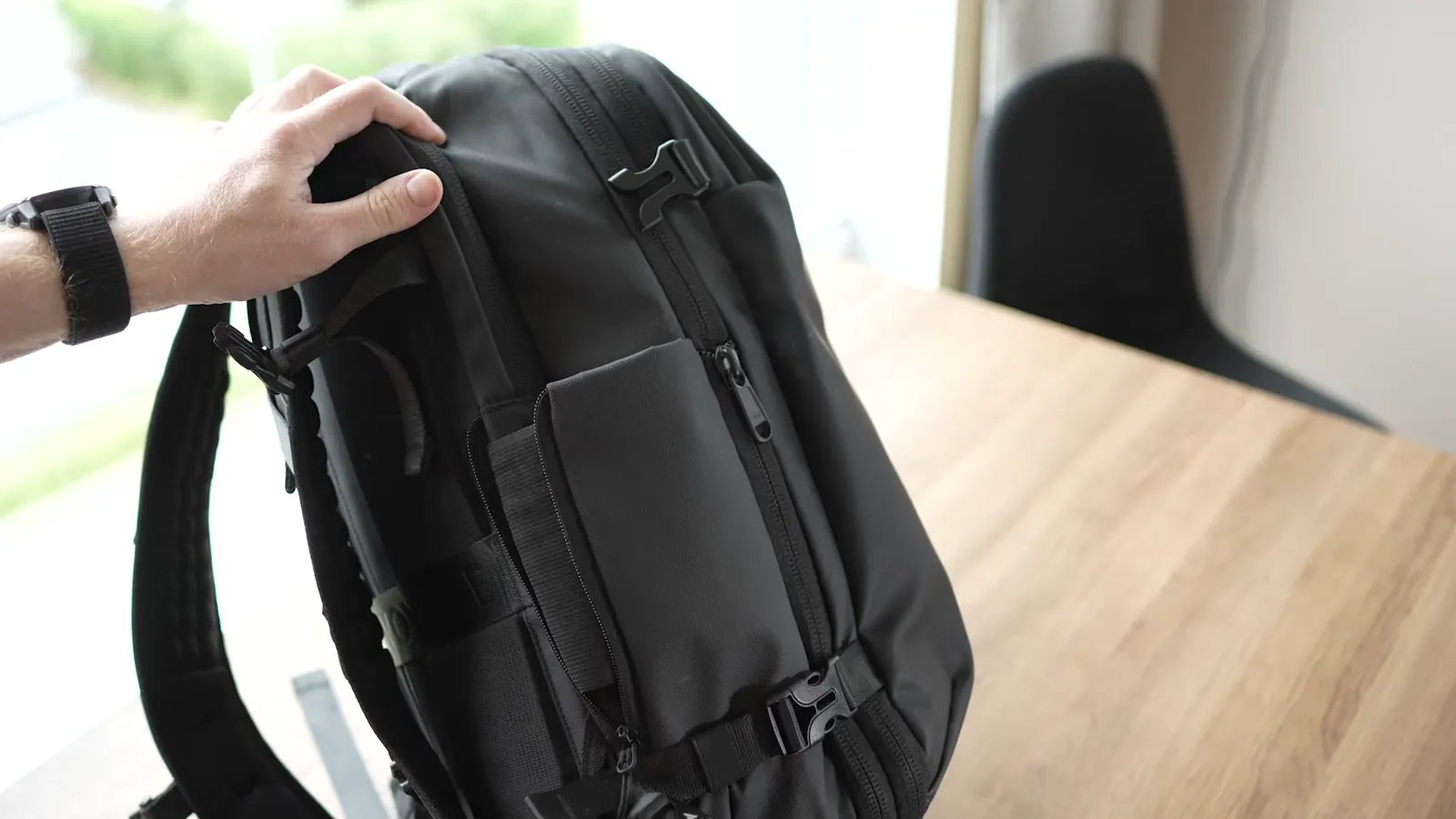
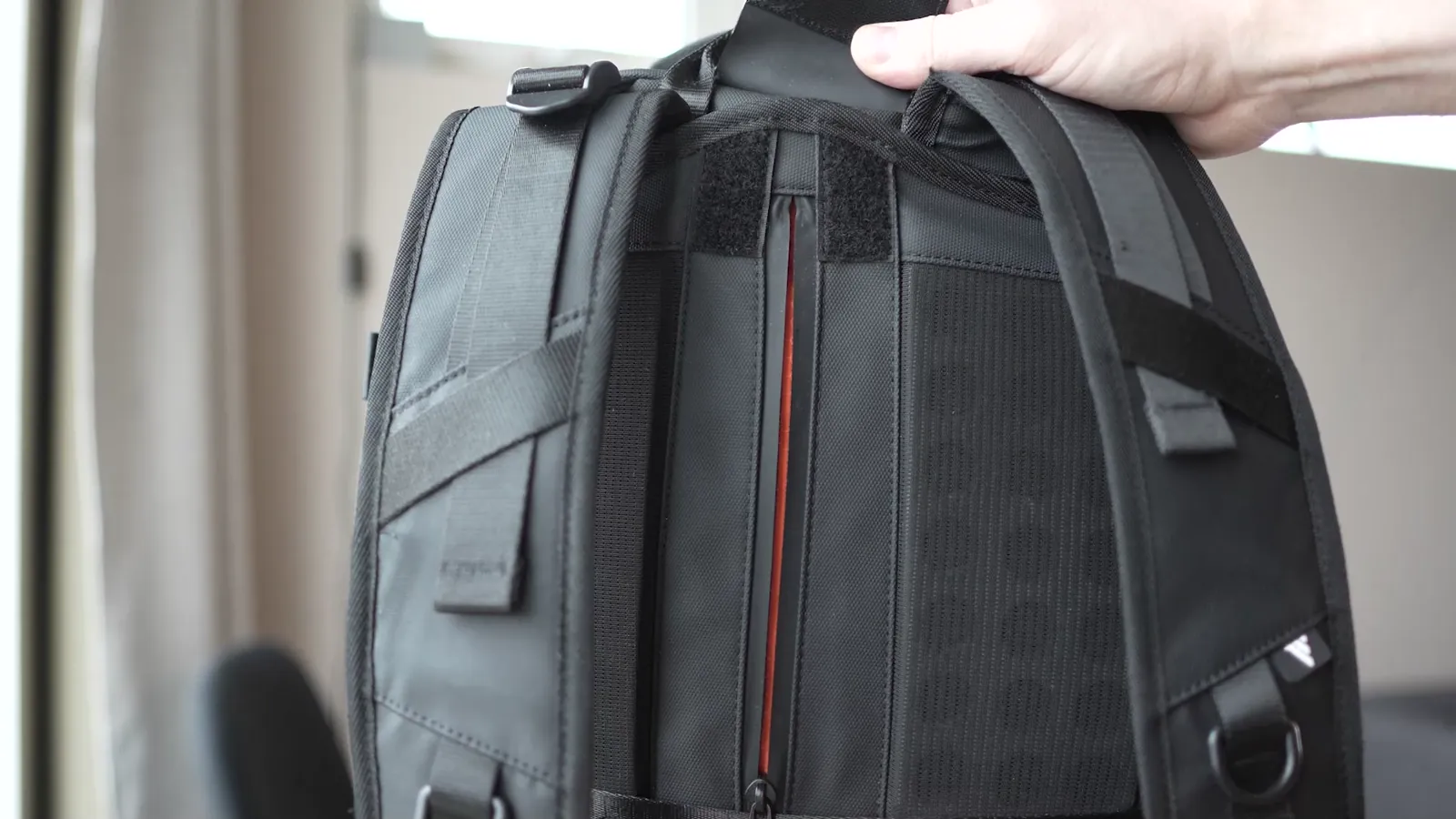
The hidden gem runs under the back panel, behind a long waterproof zipper: a stash pocket the full width of the bag. Passport, cash, cards, documents, all sit flat against your back and out of reach. This is also why I do not miss the TSA lock from the full Pro. A lock basically announces that there are valuables inside. My philosophy is the opposite. Do not advertise, keep the important things hidden against your back, and carry a bag that looks like nothing special.
The laptop compartment has structure too: two pen holders up front, a few small pockets for tech, and a laptop sleeve with a strap that holds the device in place. We have all had the moment where you open a bag and the laptop tries to slide out onto the floor. This stops that.
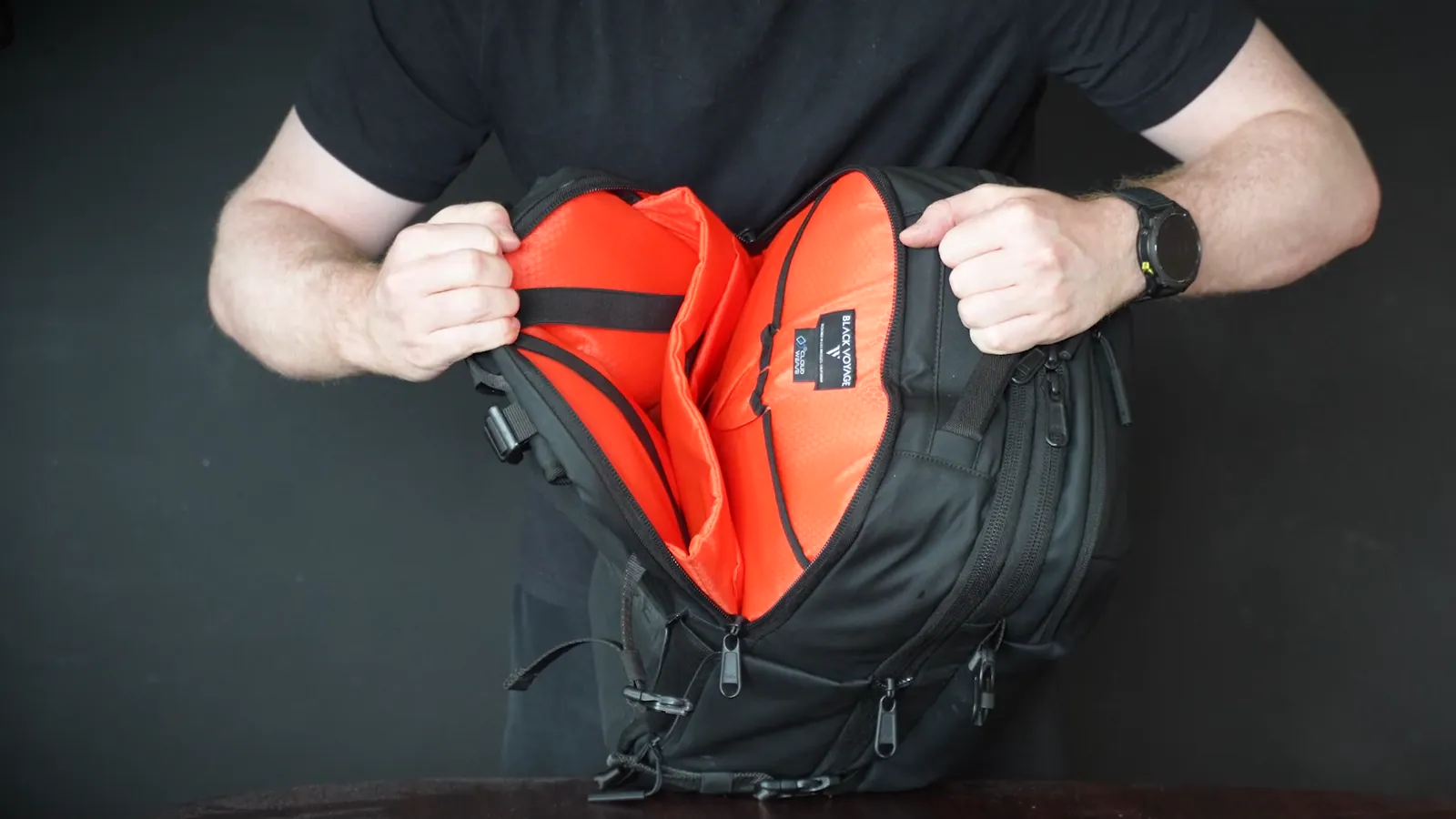
The main compartment itself has three flat stretch pockets and one deeper one for toiletries. I have seen this “pocket for everything” approach on bags like the Minaal travel pack and the Peak Design 30L, so it is not unheard of. Some people will find it too much. Others will call it a dream, with no packing cubes required.
Comfort, weight and carry
Let us be clear: this is not an ultralight bag. On my luggage scale it comes in at 2.05 kg without the hip belt, closer to 2.3 kg with it. That puts it among the heavier bags in its class.
The straps are wide and comfortable, which I always want in a bag that can get this heavy. You can unclip the shoulder straps and tuck them away completely under the back panel, which is great for checking the bag or sliding it into a roller. There is a removable hip belt too, and you will want it once you actually use that high capacity.
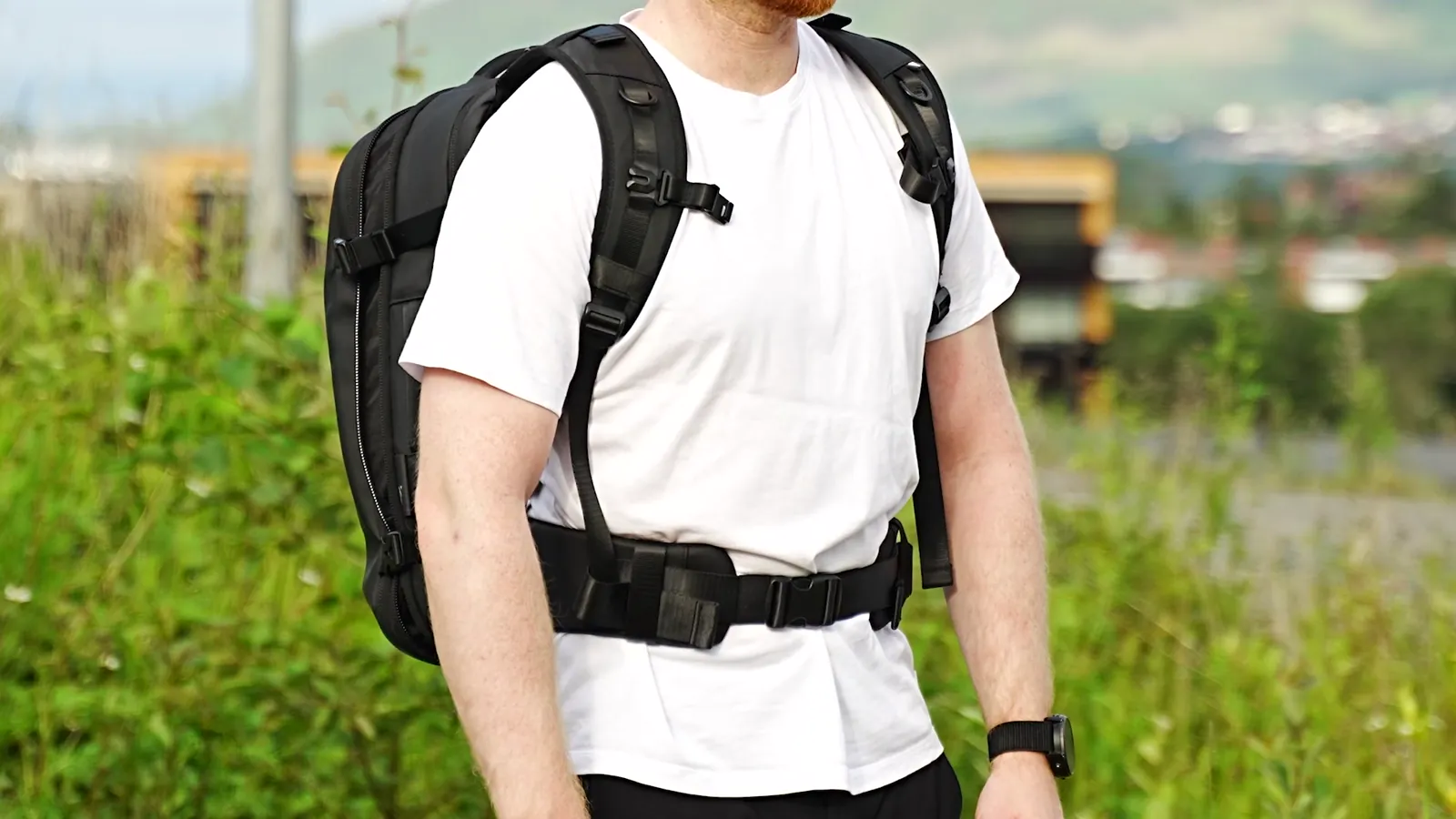
I learned that the hard way. On a recent trip my flight was delayed, and I ended up walking about 2.5 km uphill from the bus stop with the bag fully loaded. I felt every kilo. To be fair, that had more to do with how much I stuffed inside than the bag itself. What I did not do that day was clip on the hip belt. In hindsight, I really wish I had.
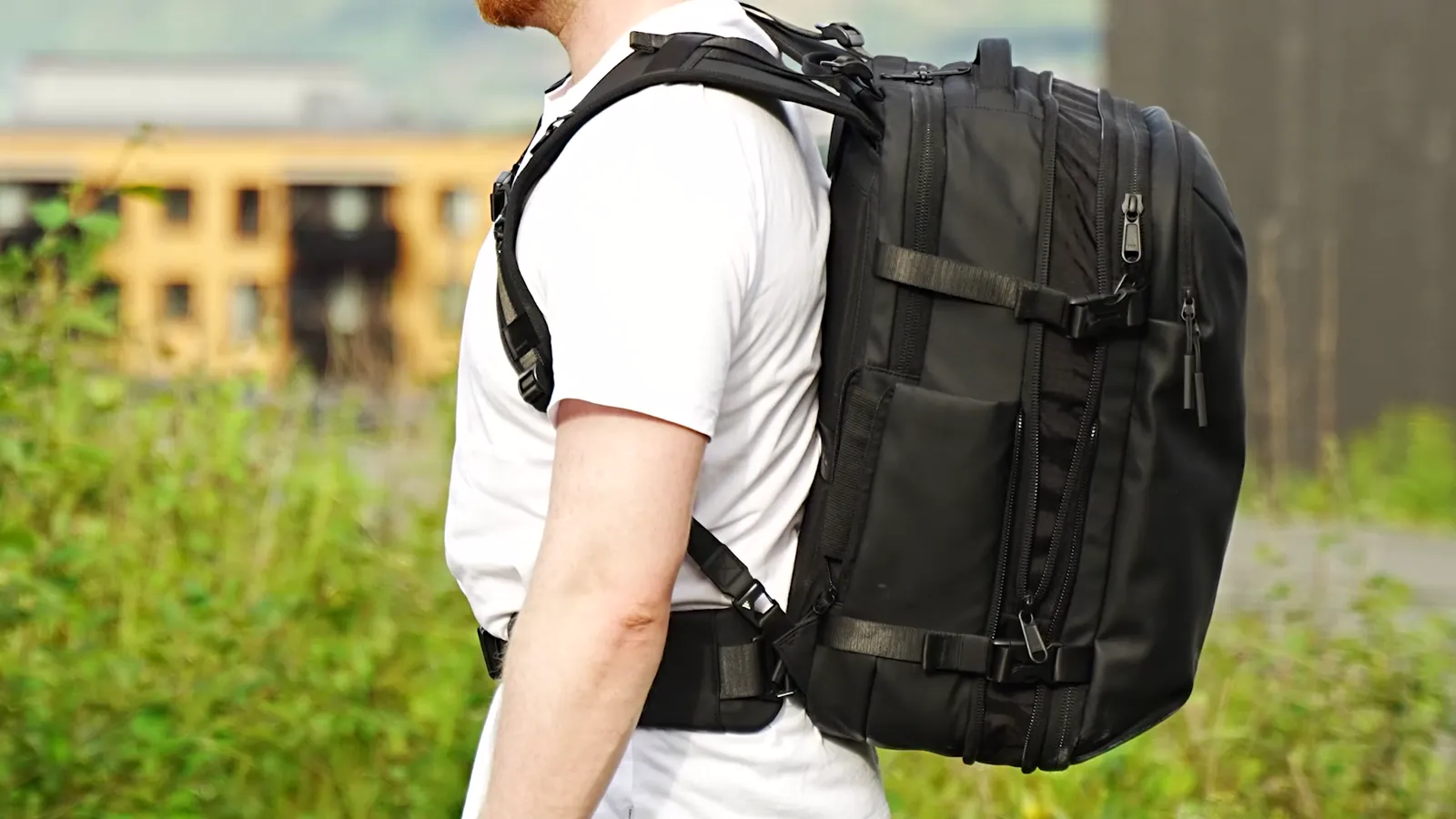
Living with it as travel and everyday carry
So does it actually work as cabin luggage? I flew it domestically here in Norway, and the short answer is yes. It went straight into the overhead bin and always felt within carry-on limits. The flight home used a smaller plane, and fully expanded the bag got a little tall and tight. On bigger domestic jets like a 737-800 you will be fine.
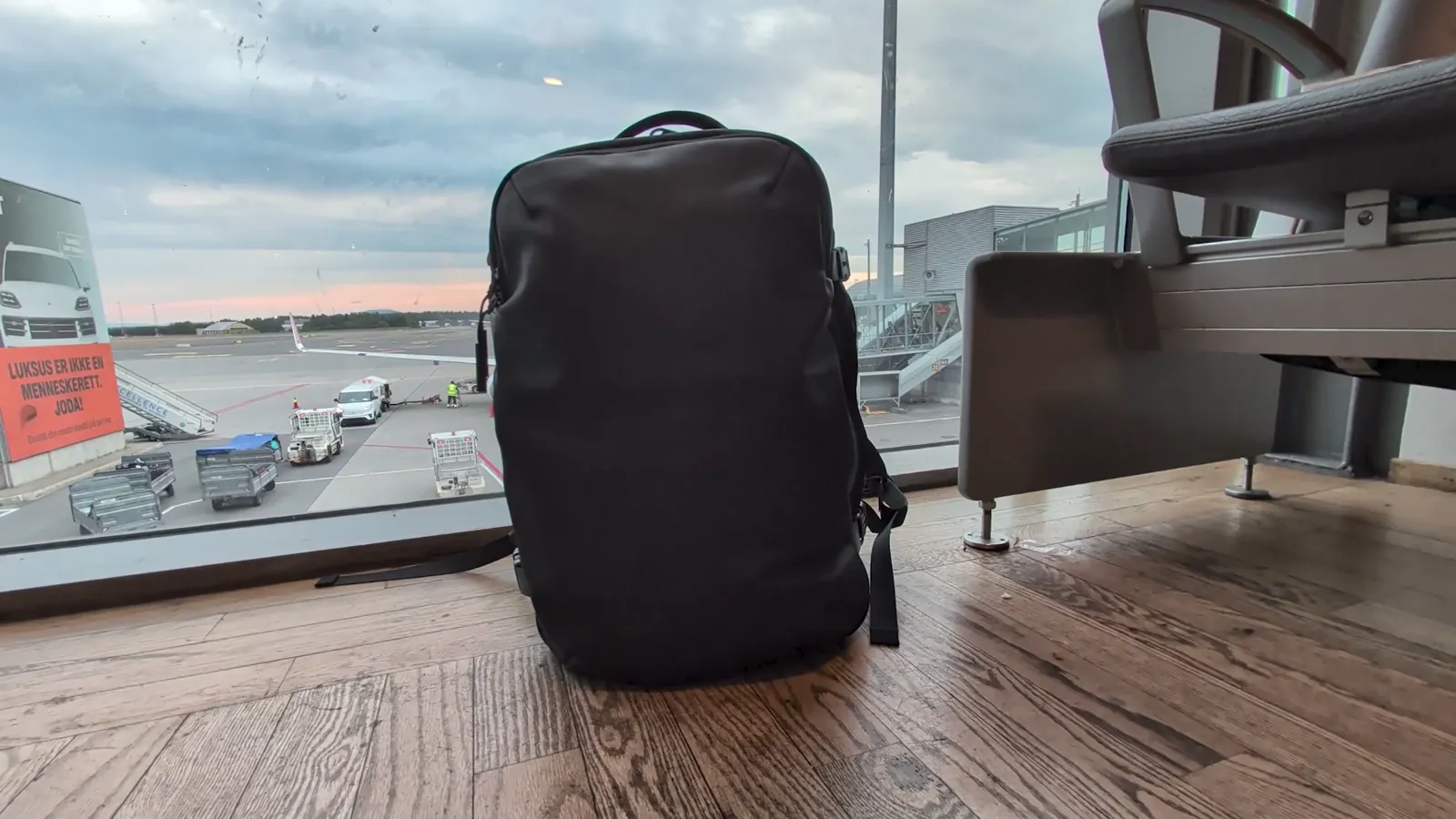
Off the plane, it quietly becomes my commuter and work bag, usually in its compressed state. I buy groceries on the way home, and being able to expand the bag instead of juggling a heavy tote is genuinely useful.
Now the honest cons, the ones that showed up over the months:
- The zippers rattle. The YKK zippers themselves are excellent, smooth and solid, and I trust them. But the pulls rattle as you walk, and it drives me a little crazy. If you know a clean way to silence YKK zipper pulls, the comments are yours.
- Airport security and the sealed chamber. If security needs to open the vacuum chamber while it is fully packed, it sucks in air and balloons up. You cannot calmly repump it at the checkpoint, so you step aside and repack. If you rarely fly, this is a non-issue.
- Wrinkles. Vacuum compression creases some fabrics. It is fine for a lot of garments, but not for linen. Only compress clothes that can take being squashed.
One thing that genuinely worked for me: Norway gets cold, and crushing down a big wool sweater with the pump is really useful. I packed two large wool sweaters plus training gear just to test it, and the bag swallowed them.
Who should buy the Zephyr Pro Lite
Would I recommend it to everyone? No. Would I take it on a two to five day trip in Norway or abroad? Pretty much yes.
The way I see it, this bag is for travelers who want a lot of features and the option to pack down the parts of their kit that eat the most volume, like bulky clothes. If that is you, the vacuum seal is a genuinely useful tool. Yes, it tempts you to pack more, which means a heavier bag. But for a lot of travelers, weight was never the problem they were trying to solve.
The ultralight and hardcore one-bag crowd will stick to their ideals, and that is fine. This bag is built for a different person: someone who wants a big, stuffed bag that does not have to be stuffed all the time.
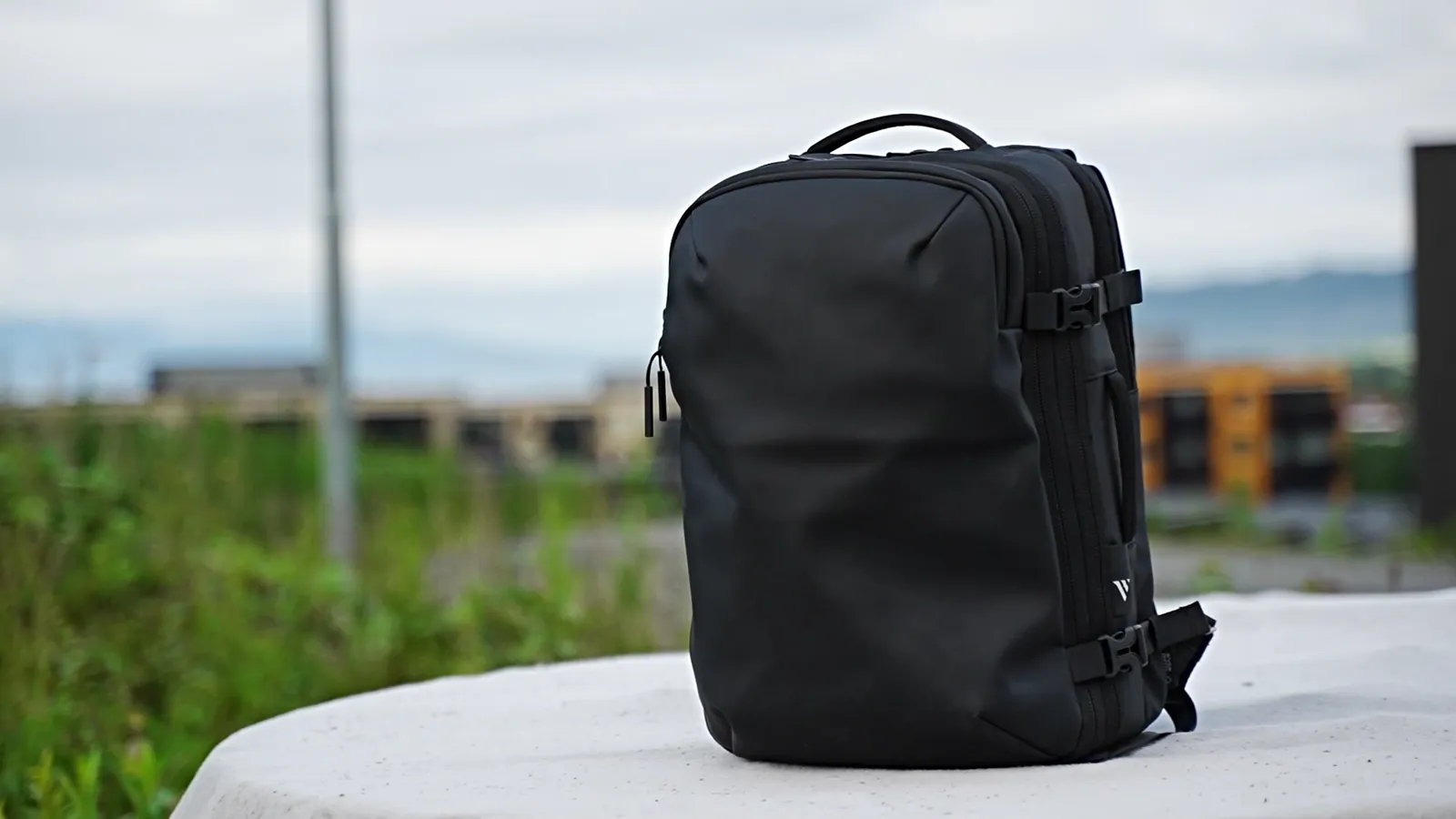
If that sounds like you, you can check the current price and fabric options on the Black Voyage Zephyr Pro Lite here.